Should I Rent a Car in Japan?
The benefits of renting a car in Japan are situational, but it's certainly a vert good option in a lot more cases than one might initially think.
Renting a car is easy, gives a lot of freedom and flexibility, and not nearly as expensive as a lot of bad advice would lead you to believe.
Over nine days in Japan, a family of four rented a car and only paid about ¥2,000 per person per day more than public transport.
In exchange, they gained luggage freedom, schedule independence, faster travel in less-connected areas, and fewer constraints overall - even while visiting Kyoto and other major tourist stops.
In this post, we will look at at the full costs and benefits of renting a car. Not just the initial sticker shock, but a day by day look at what having a rental car will mean to not only your budget, but more importantly the overall flow of your trip to Japan.
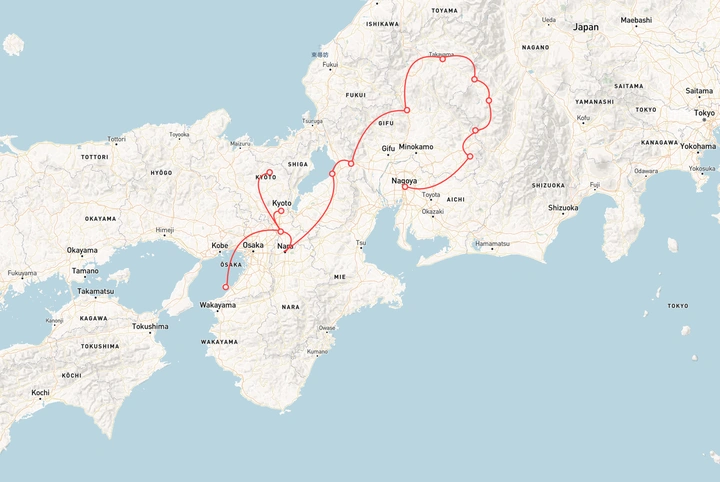
We'll walk through one family's itinerary planned around major, mainstream tourist destinations - Kyoto, Nara, the Nakasendo, Takayama, and Nagoya. These are places most people already have on their itinerary.
Their experience illustrates all the potential benefits of renting a car.
- Uncomprimised flexibility
- Freedom from descitions based on train schedule
- No worries about luggage management or transfer
- Shorter travel times between destinations
- Broadened range of Accommodation options & prices
- much more...
I'm not saying renting a car is the best choice for everyone, but when helping people plan, I often find that having a car would solve way more of the logistics issues people face than it will cause. There's a reason private taxi days tours exist and there's a reason many locals that have cars use them to travel.
First, for some reason, this is a controversial topic on reddit and other travel forums.
On one side are the die-hard "Japan's public transportation is so good you never need a car" crowd. They're not wrong about Japan's public transport system being great, but frankly you should not let other people on Reddit tell you what you need or don't need for your own vacation.
On the other side are people who can recognize that yes, Japan does have really great public transportation, but when it comes to renting a car or not, a case-by-case approach is warranted.
Unfortunately, if someone points out that - depending on group size and travel goals - renting a car can be similar in cost, or even cheaper, those comments tend to be downvoted out of sight and many people miss out on what might be good advice for them.
I'm not here to tell you which is best or worse, but I want to provide a clear, logical example of how to look at car rental rationally. Yes, might cost more. But also yes, it might be worth it. Only you can decide that for yourself.
Oh, and no, it's not only for seeing rural Japan, or the "other" islands (Shikoku, Kyushu and Hokkaido)! Renting a car can make sense on your first visit, even some places on the Golden Route.
The main reasons people usually site for not renting a car:
- Japan's public transport is good enough
- Parking is complicated and expensive
- Tolls are expensive
These are not completely wrong, but the real truth, however, is a little more situational:
- Japan's public transport is good enough in some situations.
- Parking feels expensive, but is often easier, and can be worth the the extra cost compared to public transport.
- Tolls are not a necessity and when you choose to pay, often can be worth it.
- Driving in an unfamiliar place can come with stress, but it is quick and easy to overcome.
You should base your decision on your real, rational goals, rather than irrational fears. Consider:
- Where you're going,
- How many people you're traveling with,
- How much luggage you have, and
- How much flexibility you value
As far as directly monetary comparison, most people tend to stop at just the ticket price vs rental fee + gas, tolls, and parking.
That's fair to get a good baseline, and the car rental will probably come out more expensive in a lot of cases - but it also may be totally worth it. It opens the door to a lot of places that would be otherwise impossible, and opportunities and decisions that would have been "Is it worth it?" become "Why not? There's nothing to lose." additions to the itinerary.
There are also cases though, where renting a car can easily end up saving you money.
Below, we'll walk through one family's itinerary planned around major, mainstream tourist destinations - Kyoto, Nara, the Nakasendō, Takayama, and Nagoya. These are places most people already have on their itinerary.
Along the way are a few well-known but often skipped stops like Hikone, Sekigahara, and Iwamura. They're nothing extremely "off the beaten path," and all are reachable by public transport, but they're often left out because they seem impractical, requiring extra transfers, tight connections, or rearranging the day around train schedules.
Before getting into the day-by-day breakdown, it helps to be clear about what is - and isn't - being compared.
How Much Does It Actually Cost to Rent a Car in Japan?
Obviously, there's the base cost of renting a car. That varies, and you can look it up yourself.
What matters more is the total cost, both tangible and intangible.
Sometimes the cost of renting is less than the true cost of not renting - paid for in time, flexibility, and missed options.
Renting has its secondary costs - parking, tolls, and gas. But not renting has its own costs too, like luggage forwarding, extra taxi rides to bridge gaps in public transport, time lost to transfers and schedules, and, for some people, the mental overhead of constantly planning around them.
If keeping the budget as tight as possible is a priority, it's also worth factoring in the smaller incidental savings having a car can allow for, such as staying in cheaper accommodation away from major stations, or being able to buy everyday meals at supermarkets instead of relying on inflated prices in tourist areas.
There's also the cost of missed options - places skipped because they don't fit neatly into a train or bus timetable, or are just too far to walk to.
So, When Is a Car Worth It?
First, the obvious - if your car is just going to sit in the hotel parking lot all day, it's probably not worth it.
If you're spending your entire trip inside major cities with dense rail coverage, the occasional taxi will almost always be cheaper and easier than a renting car.
In the greater Tokyo Metro area, there are fewer, but not no, scenarios where having a rental car would help - that is the one place where the "tolls, traffic, and parking" argument 100% fits. That said, if you are going to do a day trip or overnight somewhere were you would like more freedom, you may want to at least check it out before discarding the idea. The pure cash cost will likely be higher than taking trains, but depending on your needs, it may be worth it. If it was always a terrible idea, locals would not rent, and there would be no car rental shops in Tokyo.
This is especially true of places outside Tokyo, where you start making day trips, visiting multiple stops in one day, or carrying luggage between regions, the equation starts to change. It might still cost more, but in many cases you can expect it to deliver more value than simply getting from point A to point B. Also pay attention to if you find you are making day trips because you need a "base" for your luggage, rather than making them through trips - stopping to see someplace on the way to your next night's destination.
This is especially true for groups of three or four or more, where public-transport costs multiply quickly while car costs stay relatively flat. If traveling as a group of friends, especially, where it's not one budget that shoulders the total of any extra cost, it can work out to be an especially good deal.
If you are a family working form one tight budget, adding 80,000 yen can feel like a lot, but if it's a group of four friends, each with their own budget, 20,000 extra per person for a week of freedom can feel more than justifiable.
Not Just for "Getting Off the Beaten Path"
This can't be overstated, so I bring it up again.
It's obvious that a car helps in rural Japan. And that is the main use case you often see this made online - usually framed as "cars are only worth it if you're going deep into the countryside." That couldn't be further form the truth.
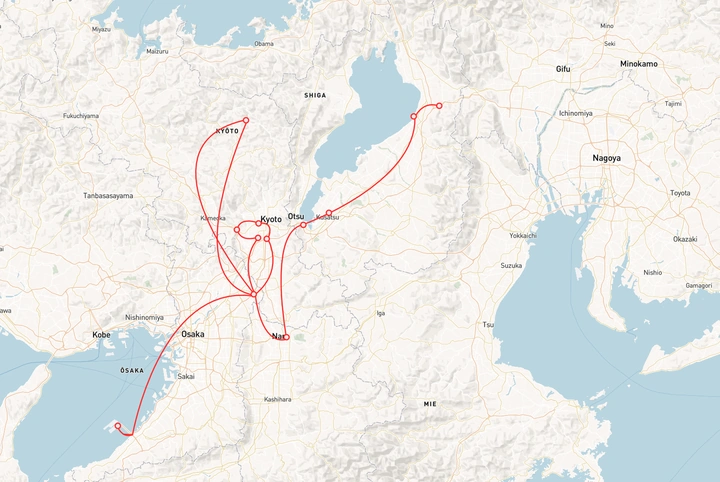
There's a reason taxi tours and private drivers exist in Kyoto despite costing more than trains. Even a single day driving around the edges of Kyoto allows you cover more ground with a car. They are easier to plan with, less complex to navigate, and generally more comfortable.
The itinerary I'm using below is not particularly rural. It's a very normal route, most of it is possible by train or bus. But as we see the days actually unfold, it becomes more obvious how many small compromises people end up making in the name of the "convenience" of public transportation.
In Kyoto, having the car can shave hours off of transportation time, making it possible to either see more, or see the same things, but at a more relaxed pace.
Getting out of Kyoto, but still in the main tourist area like Nara. It can save an entire day if Nara is a stop on the way to your next destination, rather than a day trip. Having a car means you don't have to keep a hotel room as "a base", just for someplace to store luggage.
It also means that visiting some places as a day trip does not necessitate setting aside an entire day. If you arrive and don't find it interesting, you can easily move on. But being beholden to schedules means leaving someplace early or staying longer than you want in order to fit to train schedules, or even dropping an attraction completely because it just doesn't make sense with public transportation.
Individually, these are all small annoyances, maybe, but they do add up, and they can change the tone of a day or even an entire trip.
With a car, many of those compromises disappear. Your luggage stays with you in the car, out of sight and mind. It becomes an afterthought - from one of the most itinerary-shaping considerations to something you only think of when you need to change your socks.
Another major benefit even in major tourist areas, is that hotels don't need to be near major stations or walkable to the destination. This allows for not only potentially more affordable options (which might end up paying for the car rental itself), but also more last minute options and more day to day flexibility as where you go is not limited to room vacancy.
A car doesn't just change where you can go - it changes how many small compromises you don't have to make along the way.
Even small things like just leaving the umbrella in the car until it looks like rain, dropping your bags on the car after shopping between going out to dinner, or even having a change of shoes, to go from walking all day mode to sit down dinner mode without going back to the hotel.
None of this means a car is better for everyone, or making an argument that renting a car is overall cheaper, just that don't rent a car unless you're going way off the beaten path - is too simplistic.
The Case Study: Scenario and Assumptions
This comparison is based on the experience of a real family of four traveling on a two week trip in Japan. The first nine days would move from Osaka and Kyoto to regional and semi-rural areas, before taking a train to Tokyo for the remainder of the trip.
The car was not chosen to "go off-trail," or visit remote places. The initial reason for wanting a car based trip was mobility issues for the elder parents - to reduce walking and stairs wherever possible while staying "on the beaten path. They were happy to take advantage of the side benefits a car gave them as well.
Having the car available actually changed how they planned, so it's impossible to do a clean one-to-one comparison of how much a nine day trip in general would cost and throughout this article, public transport costs reflect what it would have taken to complete the exact same itinerary.
In practice, many travelers without a car would simplify the route, skip stops, or rely on package tours - not because destinations are inaccessible, but because mid-day logistics (especially luggage) become the limiting factor.
To keep the comparison grounded and conservative, a few clear assumptions were used:
-
All prices use standard rates at the time of writing.
-
Public transport assumes no rail pass, since the goal is flexibility rather than staying within pass rules or coverage areas.
-
Parking uses real published parking rates for the specific locations visited.
-
Expressways are only included where they meaningfully reduce time. Scenic or local roads were used where they made sense, even if slower.
-
Fuel and taxi estimates are from Navitime. While fuel prices fluctuate, they're small at the distances involved.
Logistics are treated conservatively
In reality, these logistics are often what determine whether a multi-stop day is practical at all. Excluding them keeps the comparison conservative, but also means public transport appears simpler on paper than it often feels on the ground.
-
No package tours added: Common alternatives to having a rental car - such as guided Nakasendo or countryside day tours - are intentionally excluded, even though many travelers would realistically rely on them without a car.
-
No accommodation tradeoffs counted: Potential savings from staying farther from major stations (which a car makes practical) are not included, even though they could change the totals.
-
No value assigned to time or comfort: Waiting, transfers, walking distance, fatigue, and mental overhead are not monetized - even though they strongly influence how days actually feel.
In short, the price shown is skewed in favor of public transportation. If the family had truly tried to use public transportation, the total cost would undoubtedly be higher, but the pure cost of getting from point A to point B, renting a car is a fixed expense that cannot be adjusted on a micro basis in the moment - unlike deciding to walk instead of taking a taxi, skipping a stop to save a train fare, or trimming a day to reduce costs.
Once the car is paid for, many micro decisions disappear. The question is no longer "can we?" or "Is it worth it?", it's simply "Do we want to?"
On the other hand, once the car is paid for, many of those decisions disappear. Transportation stops being something that needs constant consideration in terms of cost or timing. The basis of the choice shifts away practicality limitations and add-on-costs, toward what is already possible and how much you want to do or see.
The day-by-day breakdown that follows is meant to illustrate those tradeoffs in context - to show what the extra cost buys, where tradeoffs accumulate when using public transport, and how surprisingly small the difference ends up being.
A Peek at The Final Results:
A the end of nine days, at its more basic, bare-bones calculation, renting a car came to just over ¥2,000 / person / day.
Follow along below for a day-by-day illustration of what you can expect when renting a car in Japan.
Day 1 - Arrive Osaka Int. → Kyoto Accommodation
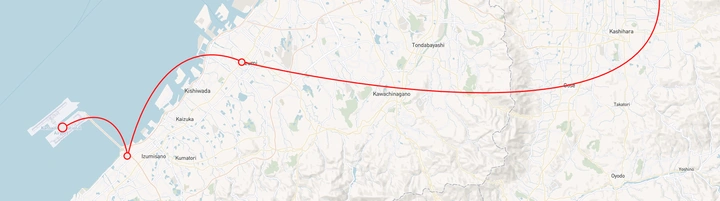
The family arrived at Osaka International Airport on a mid-afternoon flight. As they would be getting a car anyway, it made sense to rent directly from the airport, saving the price of four people's train tickets already. That's less than one day's rental cost, but it was a lot easier for handling luggage.
They didn't have plans to do any special sightseeing in Kyoto for this first day, so they were happy to head directly to their Air B&B and settle in. They were, however, hungry, so they opted to make use of the freedom a car afforded them to stop for something to eat at the food court of a mall along the way. If they had taken the bus, they likely would have settled for some convenience-store snack at the airport and had to wait until they arrive for a proper dinner.
While it may go against conventional wisdom to not stay in the middle of the city, their Air B&B was just on the outskirts of town. They figured that with a car they could choose anywhere that looked good less than an hour drive away. They weren't there for nightlife and besides, it's no different than what a lot of people do, basing themselves in Osaka and visiting Kyoto as a day trip.
They had booked a place that was just a 30 minute drive into town. It was quiet and had fewer (no) tourist crowds, and with the side benefits of inexpensive overnight parking and, more importantly, it cost considerably less than an equivalent accommodation in downtown Kyoto would have been.
What having the car changed today
- Luggage between the airport and accommodation is as simple as loading it into the car - no carting it between busses and taxis
- Their trip began the moment they got into the van instead of once they checked into the hotel - they could go anywhere they wanted at their own pace
- Ate when and where they were hungry, not limited to options at the airport or waiting until they had checked in and settled
- Access to a wider range of accommodation options and price points - no need to be near a train station
Day 1 Cost Comparison
Public transport - itemized costs
| Item | Cost | Time |
|---|---|---|
| Limousine Bus to Kyoto Station (total, 4 people) |
¥11,200 | ~1h 30m |
| Taxi x 2 (Kyoto Station - Hotel) |
¥3,000 | ~15 min |
| Public transport total | ¥14,200 | ~1h 45m |
Car - itemized costs
| Item | Cost | Time |
|---|---|---|
| First-day rental surcharge | ¥6,000 | - |
| Car rental (daily) | ¥18,000 | - |
| Toll | ¥1,500 | - |
| Gas | ¥800 | - |
| Parking | ¥600 | - |
| Car total | ¥26,900 | ~1h 20m |
ⓘ Comparison Notes, Inclusions, & Exclusions
- To keep things comparable, we assume that without the car they would instead be staying in a similar-quality hotel in downtown Kyoto.
- NOTE: Any savings gained from having lower cost accommodations is not included in the comparison.
- Being conservative, we assume a Limousine bus which is slightly cheaper than the direct Haruka train and from Kyoto Station
- We assume two taxis (four people + luggage) from Kyoto Station to the hotel, avoiding additional luggage handling on local buses or subways
Day 2 - Arashiyama → Kinkakuji → Nishiki Market → Riverside → Gion
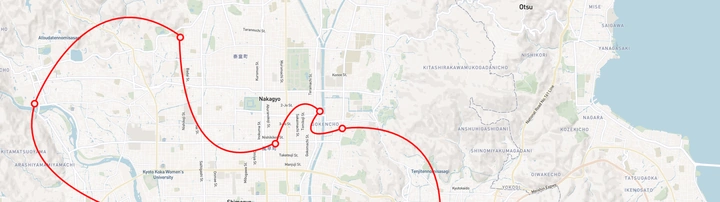
Today was their first full day in Kyoto and followed a very typical sightseeing pattern, moving between several well-known areas spread across different parts of the city. The basic outline of the plan once in Kyoto was not altered in any way because of the car. It did, however impact their morning slightly.
While the most common advice is to start early to avoid crowds, their non-central location made it feel somewhat excusable to disregard that advice. There would be no 5 am wakeup to see a tourist-free temple and they honestly didn't feel that they were missing out on much.
But... one of their big goals for the trip was to eat like a local, so instead of heading straight into town, they stopped for breakfast at a Komeda Coffee shop on the outskirts of Kyoto. While the coffee itself is not objectively any better or worse than a Starbucks in central Kyoto near the major sights, they did enjoy what felt like a little glimpse into every day life of people who were there as part of their routine, rather than being surrounded by other tourists all plotting their day's plan of attack.
After breakfast, though, the general flow of the day was pretty much just the same as all the other tourists. Arashiyama in the morning, Kinkakuji around mid-day, and the Nishiki Market, Pontocho, and Gion area later in the afternoon and evening.
Often, parking is described as a nightmare, which scares a lot of people off from driving, but as this family found it's actually very straightforward. In many cases, unless driving around in search of the absolute cheapest parking lot, it's usually much less hassle than navigating the stations.
Parking lots are plentiful, affordable, and often as close or closer to the main sights than nearby train or bus stops. Granted, in a place like Kyoto, the difference in distance between the station and a parking lot is usually not that big, but one of the main reasons for renting the car was to reduce walking as much as possible for the elder parents. Even fifty meters here and there adds up and counts. In this particular family's case, renting a car was like having a taxi. Everyone could be dropped off as close as possible, while only the driver finds someplace to park further away.
In addition to parking close to the attractions, cumulative travel time by car came to roughly half that of using public transport.
One potential downside of the car that they were initially worried about was that it would mean the group has to stay together throughout the day. There would be no option for anyone to just head back to the hotel for a break and meet up later. Luckily they were able to work around that by taking things slow, and by evening still able to enjoy dinner and a relaxed walk along the river through Gion and Pontocho.
At the end of the night, one person went to retrieved the car, then come back to pick up the others before driving about half-hour back to their accommodation outside the city.
Had they stayed in the area, within walking distance, it may or may not have taken the same amount of time to get back. Or, depending on how tired they were, perhaps they would have opted for a taxi.
What having the car changed today
- Easier to get around Kyoto without crowded buses or trains - basically like a private taxi
- Parking or getting dropped off close to attractions reduced walking and fatigue
- Roughly an hour less spent in transit over the course of the day
- No need to rely on hailing a regular taxi when tired or running late
- Chance to eat breakfast "like a local" away from the tourist centers
Day 2 Cost Comparison
Public transport - itemized costs
| Item | Cost | Time |
|---|---|---|
| Train to Arashiyama (total, 4 people) | ¥1,700 | ~45 min |
| Train to Kinkakuji (total, 4 people) | ¥920 | ~40 min |
| Train to Nishiki Market (total, 4 people) | ¥920 | ~45 min |
| Walk to accommodation | ¥0 | ~20 min |
| Public transport total | ¥3,540 | ~2h 30m |
Car - itemized costs
| Item | Cost | Time |
|---|---|---|
| Car rental (daily) | ¥18,000 | - |
| Drive to Arashiyama (gas) | ¥450 | ~30 min |
| Parking (Arashiyama) | ¥600 | - |
| Drive to Kinkakuji (gas) | ¥150 | ~20 min |
| Parking (Kinkakuji) | ¥600 | - |
| Drive to Nishiki Market (gas) | ¥150 | ~25 min |
| Parking (Nishiki Market) | ¥2,000 | ~1 hr |
| Return to accommodation (gas) | ¥450 | ~20 min |
| Parking (overnight) | ¥600 | - |
| Car total | ¥23,000 | ~1h 35m |
ⓘ Comparison Notes, Inclusions, & Exclusions
- The comparison assumes standard public transport fares with no train passes
- No taxi use is included as most walking distance are reasonable and it is impossible to know if they would have actually needed it or not.
- Parking costs reflect real prices where they were for realistic time spent at each location.
- No attempt is made to optimize public transport routes beyond what a typical visitor would reasonably plan.
Day 3 - Kiyomizudera → Miyama Kayabuki-no-sato
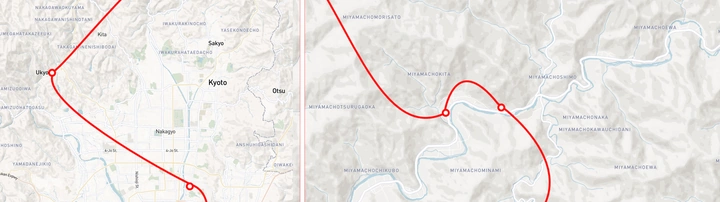
This day they decided to fully take advantage of having a car by adding Miyama Kayabuki-no-sato, a thatched-roof village roughly a 2 ~ 2.5 hour bus ride away, to the itinerary.
While they would certainly have found something else to do if they hadn't gone that far, it had been highly recommended by friends, and having the car meant they could prioritize it over closer attractions that would be easier to reach by public transport alone. Or, if they really wanted to go, and the public transportation was too restrictive, there are package day tours from around ¥8,000~ per person.
One benefit to driving themselves versus a package day tour was that they controlled the schedule, allowing them to start the day with Kiyomizudera. Knowing that traffic into the city can be heavy in the morning, they set out early, arriving ahead of the main tourist crowds and even before the busiest rush-hour traffic. Once again, parking was straightforward and no farther from the entrance than the nearest subway access.
Since they had no set time to catch a bus for Miyama, they were able to spend as much time as they like in Kiyomizudera , followed by a stroll along the nearby Sannenzaka and Ninenzaka, ending around the Kodaiji area. While the rest of the family took a break at a cafe. Once again, the son retrieved the car for a curbside pick up, saving their energy for later in the day.
The regular route to Kayabuki-no-sato with public transport typically takes over two and a half hours with transfers. Combined with limited departure times, the logistics alone are often enough to rule it out for independent visitors without a car or without joining an organized tour.
By car, it was a scenic one hour and forty minute drive. Along the way, they stopped at Jingo-ji an impressive but far less-crowded temple tucked into the mountains outside Kyoto's urban area, and stumbled across Japan's first tea plantation at Kosanji. It did end up taking a little time away from their time in Miyama, but they were glad they went there. If they needed more time, they would have rather cut their morning in main Kyoto city shorter, to spend more time here without the crowds.
At Miyama Kayabuki-no-sato, they were free to walk around at their own pace without worrying about bus departure times, allowing them to stay later. After the last of the buses had left, clearing out most of the day visitors, they had the village to themselves to wander. The small museums had already closed as well, but it was the most peaceful moment they had had since arriving in Japan.
Before leaving, they stopped at Miyama Kajika Onsen, right next to the village, for their first onsen experience. That too was almost like having a private bath now that most people had left, and tourists spending the night were already having dinner at their inns. Evening traffic was light, making the return drive simple. There was no place really to stop, so it was door-to-door onsen to Air B&B. By public transport, this would have required some coordination with evening bus departures and train connections, followed by either taxi or another subway back to any hotel in the city.
What having the car changed today
- Easy parking close to Kiyomizudera, reducing walking
- Curbside pickup up allowed the parents to wander without worrying about how far the walk would be to get back
- Easy access to Miyama without the cost of a package tour or managing public train and bus schedules
- Flexibility to add smaller, less touristed, unexpected stops along the route
- Freedom to stay in the village after tour buses and public transport had stopped
- Easy inclusion of an onsen stop as part of the return drive
- More than an hour less spent in transit overall
Day 3 Cost Comparison
Public transport - itemized costs
| Item | Cost | Time |
|---|---|---|
| Train to Kiyomizudera (total, 4 people) | ¥920 | ~40 min |
| Bus to Kayabuki-no-sato (total, 4 people) | ¥6,400 | ~2h 30m |
| Bus back toward Kyoto | ¥6,400 | ~2h 00m |
| Public transport total | ¥13,720 | ~5h 10m |
Car - itemized costs
| Item | Cost | Time |
|---|---|---|
| Car rental (daily) | ¥18,000 | - |
| Drive to Kiyomizudera (gas) | ¥350 | ~20 min |
| Parking (Kiyomizudera) | ¥1,500 | - |
| Drive to Kayabuki-no-sato (gas) | ¥800 | ~1h 40m |
| Parking (Jingo-ji area) | ¥1,000 | - |
| Parking (Kayabuki-no-sato) | ¥500 | - |
| Return to accommodation (gas) | ¥1,000 | ~1h 30m |
| Parking (overnight) | ¥600 | - |
| Car total | ¥23,750 | ~3h 55m |
ⓘ Comparison Notes, Inclusions, & Exclusions
- For comparison purposes, we assume the group follows the same plan using public transport rather than skipping Kayabuki-no-sato entirely, even though many travelers would likely avoid this destination without a car.
- Organized day tours to Miyama, typically costing around ¥8,000 ~ ¥11,000 per person, are not included in order to keep the comparison focused on independent travel.
- No taxi is included although if they had taken public transport, most likely this particular family would have taken a taxi back to the hotel after the long day.
Day 4 - Nara → Hikone → Small Japanese Inn
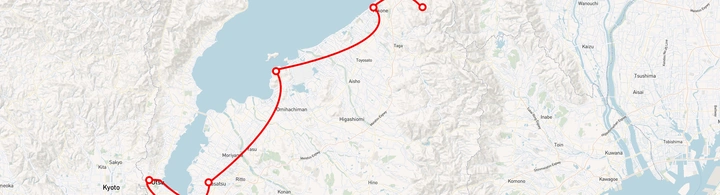
Instead of treating Nara as a separate day trip, having a car allowed them to include it as a stop while traveling between Kyoto and their next destination near Hikone, making what would normally be two separate travel days - a round-trip visit to Nara and a later transfer toward Hikone into a single day that combined transit and sightseeing.
Carrying full-size suitcases through sites like Nara Park or Hikone Castle would not have been realistic, so without a car, attempting the same plan would have required forwarding luggage. While coin lockers exist in most locations, availability is unpredictable, and repeatedly moving luggage in and out would eat up some small, but still valuable time.
Even with luggage forwarded, they would still need to carry two days' worth of clothing and essentials in a smaller day pack - easier than a full suitcase, but still inconvenient while sightseeing.
Driving themselves, their bags just stayed in the car. At any location all they needed was a purse, camera and maybe an umbrella.
After Nara, they continued toward Hikone. Rather than taking the expressway, they chose local roads. The drive took about an hour longer than the toll road but was still comparable to train travel. More importantly, it gave them the freedom to explore and stop along the way. One such stop was Kusatsu-juku, a quiet post town on the historic Nakasendo. Most people don't bother with it because it requires a train stop and short walk, but with several excellent small museums and none of the crowds it was more relaxed than the better-known towns like Magome or Tsumago. They would not realize it until they actually visited Magome in a few days, but the people of Kustatsu-juku seemed warmer and more welcoming, probably, because there are not nearly as many tourists that make the effort to stop there.
They wished they could have stayed longer in Kusatsu, but even with a car they needed to keep an eye on the clock in order to reach Hikone Castle with enough time to explore before closing.
While Himeji is more famous, they weren't dedicated castle enthusiasts. They were happy just to see a castle, but didn't want to make a full day trip to Himeji. With Gujo Hachiman Castle and Nagoya Castle planned later, although Hikone was a natural fit for the route, they would not have been crushed if they had arrived too late, but having the car made it a non-issue.
After visiting the castle they continued on to a small Japanese-style inn in the mountains. There was a local train station nearby, so public transport would not be impossible, but reaching the inn that way would have required a long walk with luggage or likely a taxi for the final stretch.
Because they were not constrained by train schedules or last connections, they didn't need to commit to a fixed arrival or dinner time at the inn. Instead, once settled in, after a little rest it was only a short drive back out for a late meal. That type of flexibility that would have been difficult to replicate using public transport.
What having the car changed today
- Nara became a natural pass-through stop instead of a separate round-trip from Kyoto
- Two travel days were effectively combined into one forward-moving day
- Luggage stayed in the car, avoiding forwarding fees, locker uncertainty, and repacking
- Sightseeing choices (Hikone instead of Himeji) followed the route
- Lesser-known detours like Kusatsu-juku fit naturally into the day
- Reaching a rural inn did not require taxis, long station walks, or fixed arrival times
- Over an hour less spent in transit overall
- Net savings of ¥3,110 per person compared to public transport
Day 4 Cost Comparison
Public transport - itemized costs
| Item | Cost | Time |
|---|---|---|
| Luggage forwarding (Takkyubin) | ¥20,000 | - |
| Train to Nara (total, 4 people) | ¥6,000 | ~1h 00m |
| Train to Hikone (total, 4 people) | ¥8,000 | ~2h 30m |
| Train + walking to inn | ¥960 | ~1h 00m |
| Public transport total | ¥34,960 | ~4h 30m |
Car - itemized costs
| Item | Cost | Time |
|---|---|---|
| Car rental (daily) | ¥18,000 | - |
| Drive to Nara (gas) | ¥400 | ~35 min |
| Toll | ¥520 | - |
| Parking (Nara) | ¥1,000 | - |
| Drive to Hikone (gas) | ¥1,400 | ~2h 30m |
| Parking (Hikone) | ¥1,000 | - |
| Drive to Japanese-style inn (gas) | ¥200 | ~30 min |
| Car total | ¥22,520 | ~3h 35m |
ⓘ Comparison Notes, Inclusions, & Exclusions
- For comparison purposes, we assume the group visits Nara Park and Hikone Castle on the same day and arrives at their accommodation in the evening.
- Full-size luggage is forwarded ahead to Takayama, allowing freedom at intermediate stops, though travelers still carry two days' worth of essentials.
- Alternative itineraries - such as treating Nara as a separate Kyoto day trip, substituting Himeji Castle, or adding extra stops - are excluded to keep the comparison focused on executing the same route.
- We assume that the family would have eaten dinner at the inn, rather than go out again, so no taxi fare is added.
Day 5 - Shiga Inn → Sekigahara → Gujo Hachiman
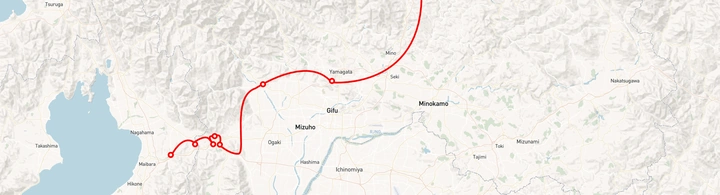
The family left the inn and made their way toward Sekigahara. This stop was included specifically because one member of the group was a fan of the Shōgun television series and had also seen the 2017 film, Sekigahara. It really mattered the most to one person, but without a car it would have required giving the stop a much more prominent place in the itinerary, at the expense of other sights that were of broader interest to the group.
Sekigahara is reachable by train, but the battlefield sites themselves are spread well beyond the station area. While technically walkable with enough time, visiting more than one or two points without a car quickly becomes impractical with limited time or, like in this case, limited mobility. A train-based stop would likely have been limited to a brief visit near the station, offering only a partial sense of the site and little context for the broader landscape of the battle.
The car was helpful to easily and quickly move between the multiple important historical spots without the stop turning into a half-day commitment. They were able to satisfy one member's wishes but it didn't dominate everyone else's day.
After Sekigahara, they continued toward Gujo Hachiman, stopping only at a few small places that caught their eye along the way. There was no pressure to arrive at a specific time, since seeing Gujo itself was planned for the following day and only required arriving by night.
With no fixed sightseeing deadline to work toward, they chose local roads instead of the expressway. This added roughly an hour compared to the toll road (not counting stops), but the overall travel time remained comparable to taking the train, with the added benefit of scenic stretches and the freedom to stop for lunch or short detours.
By contrast, the train-and-bus combination would have taken a similar amount of time but required transfers and offered far less flexibility to stop along the route and limited chance for a relaxed lunch break.
They arrived in Gujo Hachiman with time to walk around town and settle in before sundown. With another full day already set aside there before continuing on to Takayama, there was no need to rush or try to squeeze the visit into a single afternoon.
What having the car changed today
- Sekigahara and Gujo Hachiman could be linked into a single day with no time pressure
- Battlefield sites spread beyond the station could be explored fully without taking over the entire day's itinerary
- Scenic local roads and spontaneous detours broke up the long transit time
- Toll roads remained a choice, not a requirement
- Over an hour less spent in transit overall
Day 5 Cost Comparison
Public transport - itemized costs
| Item | Cost | Time |
|---|---|---|
| Train to Sekigahara (total, 4 people) | ¥1,320 | ~25 min |
| Train to Gujo Hachiman (total, 4 people) | ¥8,840 | ~2h 20m |
| Public transport total | ¥10,160 | ~3h 30m |
Car - itemized costs
| Item | Cost | Time |
|---|---|---|
| Car rental (daily) | ¥18,000 | - |
| Drive to Sekigahara (gas) | ¥200 | ~20 min |
| Parking (Sekigahara) | ¥200 | - |
| Drive to Gujo Hachiman (gas) | ¥1,200 | ~2h 00m |
| Parking | ¥500 | - |
| Car total | ¥20,100 | ~2h 20m |
ⓘ Comparison Notes, Inclusions, & Exclusions
- For comparison, we assume only a brief stop near Sekigahara Station for public transport users.
- Fully visiting the battlefield sites within the same timeframe would typically require taxis or guided transport, which are not included.
- The car route uses local roads only; toll roads were available but not necessary and are therefore excluded.
Day 6 - Gujo Hachiman → Takayama
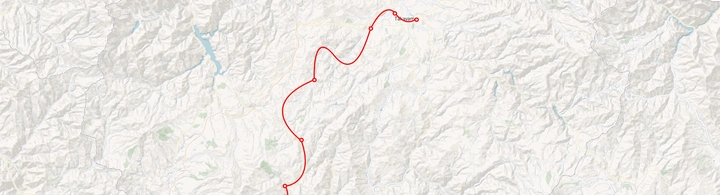
They had arrived early enough to explore a little of Gujo Hachiman the previous afternoon and Takayama was also planned as an overnight. The main reasons for Takyama was to see the morning market, which they would see the following day so there was no rush to get there early. This meant they had a little more time to sleep in or explore Gujyo in the morning with no worries about bus times or reservations.
Although Takayama is often paired with Shirakawago in most suggested itineraries, having already visited Miyama Kayabuki-no-sato earlier relieved any FOMO pressure to include it here, although it was still an option on the table up until that morning when they decided to just take it slow. If they had been moving with public transport, probably they could have gotten bus tickets at the last moment, but no gaurantees and it would have limited their options.
There is a toll road to Takayama, but the scenic road to Takayama added less than thirty minutes, so they stuck with that. Their only time concern was the opening hours of the Hida Folk Village. But since they were driving, they could go directly, well before closing time. By public transport, this would have meant first reaching Takayama Station and then transferring to a local bus, adding another layer of transfers and timing to manage.
After visiting the folk village, they drove into central Takayama to explore any shops still open and just enjoy the feel of the street. Although parking here is slightly more expensive than in smaller, more rural towns, they found spaces closer to the main sights than the train/bus station.
Their accommodation that night was a hot spring resort slightly outside town that offered a free hourly shuttle from the train station. While this would have reduced taxi use if traveling by public transport, having the car still made the end of the day simpler and reduced walking for the elder parents.
What having the car changed today
- A relaxed start without planning around a fixed bus or train departure
- Shirakawago option was possible until the last minute with no worries about bus schedule or seat availability
- Freedom to take the scenic route
- Visiting the Hida Folk Village as a simple stop along the way instead of a separate add on after arrival
- Parking closer to sights reduced walking and fatigue
- Evening plans stayed flexible, without timing sightseeing around shuttle schedules
- Slightly less time spent in transit overall, with the option of toll roads if needed
Day 6 Cost Comparison
Public transport - itemized costs
| Item | Cost | Time |
|---|---|---|
| Bus to Takayama (total, 4 people) | ¥10,000 | ~2h 00m |
| Bus to Hida Folk Village (total, 4 people) | ¥840 | ~10 min |
| Public transport total | ¥15,240 | ~2h 10m |
Car - itemized costs
| Item | Cost | Time |
|---|---|---|
| Car rental (daily) | ¥18,000 | - |
| Drive to Takayama (gas) | ¥900 | ~1h 25m |
| Parking | ¥1,000 | - |
| Drive to Hida Folk Village | ¥0 | ~10 min |
| Car total | ¥19,900 | ~1h 35m |
ⓘ Comparison Notes, Inclusions, & Exclusions
- For comparison, we assume a direct highway bus between Gujo Hachiman and Takayama and that the group also visits the Hida Folk Village after arrival.
- Local buses within Takayama are not included, as distances are short and many visitors would walk.
- Parking costs are included for the car scenario, reflecting closer access to major sights.
- Toll roads are excluded, as they were not necessary for this route, though they remained an optional way to shorten travel time slightly.
Day 7 - Takayama → Kaida Kogen → Kiso Fukushima
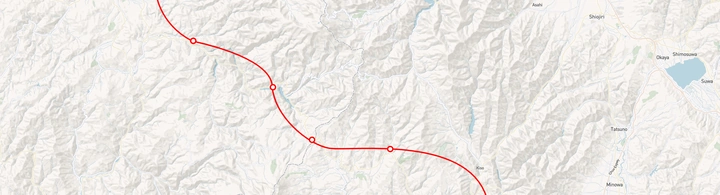
They checked out of their hotel in Takayama early in the morning, loaded the luggage into the car and spent time at the morning market, doing some last-minute shopping and taking a relaxed walk through town. Late in the morning, they set off by car toward the Kaida Kogen highlands, passing by Mt. Ontake. Using public transport would have required them to forward luggage again, leave it at the hotel and come retrieve it later (would have taken too much time), or store it in lockers at the station.
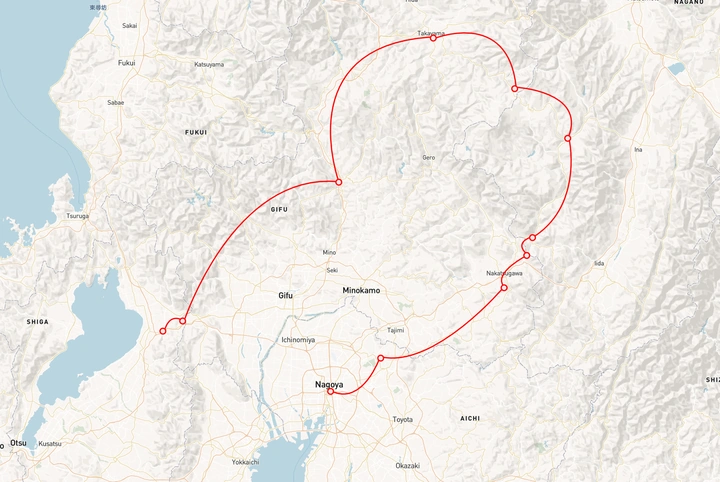
The plan for the next few days was to work their way toward Nagoya and continue on toward Tokyo by shinkansen. Without a car, cutting two days from their Off-The-Golden-Route detour and just going straight from Takayama to Nagoya would have been the easiest option to plan. With a car, they had the freedom to very easily add the Nakasendo and take a less direct route, spending a day in an area that is much harder to connect by public transport and typically requires more advance planning.
The main goal was to get to the Tsumago and Magome - popular part of the Nakasendo - the next day. That left them with a free day, and they had deliberately left this part of the trip open - both in terms of what to see and where to stay.
They had two options: Leave Takayama earlier and pushed directly to Magome or Tsumago that day, but last minute reservations are notoriously difficult to make in those towns so they would have likely stayed in Ena or Nakatsugawa. Or, choosing a slower morning and making the drive itself the focus. They chose to do that, crossing the kaida Kogen with not rush, stopping along the way to visit the Kiso Uma Horse ranch and a few small, lesser-known attractions, even as simple as a traditional toy museum.
Accommodation for the night was also kept flexible. With a car, staying slightly away from the Nakasendo would not really affect the next day's plans. Anywhere within roughly an hour's drive, including places as far apart as Ena or Kiso Fukushima, would work just as well. Because of that, they didn't feel pressure to secure a specific booking far in advance. They chose a hotel they like ahead of time, hoping it would be available once they decided, but remained open to alternatives if it was unavailable.
In the end, they found an opening at a comfortable hotel in Kiso Fukushima. Arriving with daylight still available, they briefly considered visiting a local Nakasendo History museum, but having already stopped in the post town of Kusatsu a few day's earlier, and with Tsumago planned for the following day, they chose to just check in and soak in the hot spring.
This is a day many travelers would not attempt at all, defaulting instead to limited bus and train routes or packaged day trips that bypass the Hida plateau entirely. Without a car, this stretch is difficult to replicate without committing in advance or accepting long transfers and rigid schedules.
The flexibility also allowed access to towns that were noticeably quieter and less touristed, despite being so close to well-known destinations. These weren't remote or obscure places, just towns that fall just far enough outside standard tourist routes that many travelers pass them by.
What having the car changed today
- A deliberately loose "buffer day" was possible without committing to a fixed route or advance bookings
- Driving through the Hida plateau became the focus of the day, rather than a long transfer to be endured
- Short stops at places like the Kiso Uma ranch and small local museums fit naturally into the route
- Accommodation did not need to be directly on the Nakasendo, opening up a wider range of options
- Last-minute lodging choices, including an onsen hotel, were practical without affecting onward plans
- More than three hours of travel time were saved while covering more ground
- The daily cost difference ranged from ¥450 per person at the cheapest departure to roughly ¥2,500 depending on timing
Day 7 Cost Comparison
Public transport - itemized costs
| Item | Cost | Time |
|---|---|---|
| Bus + Train to Kiso Fukushima (total, 4 people) | ¥20,800 | ~5h 00m |
| Public transport total | ¥20,800 | ~5h 00m |
Car - itemized costs
| Item | Cost | Time |
|---|---|---|
| Car rental (daily) | ¥18,000 | - |
| Drive to Kiso Fukushima (gas) | ¥1,000 | ~1h 40m |
| Car total | ¥19,000 | ~1h 40m |
ⓘ Comparison Notes, Inclusions, & Exclusions
-
Public transport does not follow the same route as the drive through the Hida plateau. To keep the comparison workable, we assume a train-and-bus combination to reach Kiso Fukushima directly, without attempting to replicate intermediate scenic stops. This would involve roughly five hours of travel, compared to under two hours of driving time.
-
We assume the group has already retrieved their forwarded luggage in Takayama. In the public transport scenario, this would require either traveling with luggage through the day or forwarding it again ahead of the Nakasendō portion of the trip. To keep the comparison conservative, no additional luggage forwarding costs are added here.
-
Many travelers address this complexity by joining organized tours for destinations such as the Nakasendō or Takayama, trading flexibility for simplicity. These are not included in the comparison, as the goal here is to compare independent travel using the same overall itinerary rather than packaged alternatives.
-
Because of the indirect routing required by public transport on this stretch, the public transport option is both slower and more expensive in this comparison, even before accounting for the added planning, handling, and logistical friction that would realistically be involved. The price here is also the absolute lowest, but not avaialble at all times of the day. In reality it would range betwee 5,200 ~ 8,000+ per person.
Day 8 - Kiso → Nakasendō → Iwamura
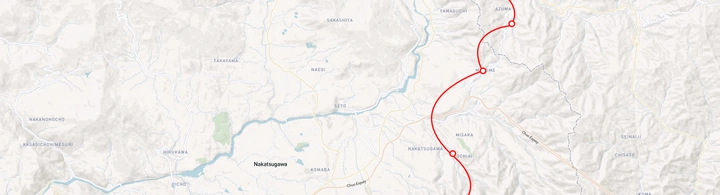
This day was set aside to spend as much time as needed on the Nakasendo, specifically Magome and Tsumago, without pressure to fit the walk into a tight schedule.
Most visitors experience these towns as a long day trip or as a two-day walk between them. While the route is beautiful, it can be physically demanding, particularly for this family's older members. Magome itself sits on a steep slope, with the main bus stop at the bottom, completely doable, but not ideal for this group. Having a car made it possible to enjoy the historic streets without turning the day into a physical challenge.
They left Kiso Fukushima in the morning and drove first to Tsumago to explored the preserved streets, shops, and small museums. From there, they drove on to Magome and parked at the upper entrance. Walking downhill through the town allowed everyone to enjoy the scenery comfortably, while one person later returned to retrieve the car and pick the group up at the lower end. Lunch was open to discretion, at a small local restaurant in Magome, or drive a short way to more options.
With daylight still available, they chose to continue on toward Iwamura, a small historic merchant town, roughly forty-five minutes away. Along the way, they noticed they had time for an unplanned stop at the Hiroshige Museum of traditional woodblock prints in Ena, adding another layer to the day without disrupting anything else.
Using public transportation, both Ena and Iwamura are easily reached from Nagoya. However, because they sit close to the more famous Nakasendo towns, they are usually passed over when travelers have to choose just one destination for a day trip or brief stop between Kyoto and Tokyo. Given more time, perhaps more people would include them. Having a car made it possible to do so without extending the trip or adding extra nights. Having the car was also a major help for luggage handling as getting around with suitcases is not viable, so without a hotel base, it becomes an issue with public transport.
Knowing they would have the following day to explore the town before returning the car in Nagoya they felt no need to rush. They arrived in the early evening, checked in, and accepted that much of the town was already closed. Dinner was from a nearby supermarket, allowing them to eat when they felt like it rather than planning around restaurant hours.
One main philosophy of this trip as a whole was that each day was structured so that, as much as possible, time didn't matter. They wanted to be flexible in the moment. If something was more interesting than expected, they could stay longer. If something unplanned appeared, they could detour or adjust without worrying about connections or last trains.
What having the car changed today
- Both Tsumago and Magome could be visited without lockers, mid-day luggage forwarding, or taxis just for bags
- Walking choices were based on comfort, not on where luggage could be stored
- Magome could be walked downhill and exited naturally with pickup at the lower end
- Extra stops, like the Hiroshige museum in Ena, fit easily on the spur of the moment
- The same experience would typically require an expensive package tour to avoid logistics
- two hours less travel time, and easier to coordinate
- Dinner and arrival in Iwamura stayed simple and flexible
Day 8 Cost Comparison
Public transport - itemized costs
| Item | Cost | Time |
|---|---|---|
| Train + bus to Tsumago (total, 4 people) | ¥4,640 | ~1h 40m |
| Bus (or walk) to Magome | ¥2,400 | ~12-36 min |
| Bus + train to Iwamura | ¥6,120 | ~1h 45m |
| Public transport total | ¥13,160 | ~3h 40m |
Car - itemized costs
| Item | Cost | Time |
|---|---|---|
| Car rental (daily) | ¥18,000 | - |
| Drive to Tsumago (gas) | ¥500 | ~1h 00m |
| Parking (Tsumago) | ¥500 | - |
| Short drive to Magome | ¥100 | - |
| Drive to Iwamura (gas) | ¥400 | ~43 min |
| Parking (Iwamura) | ¥500 | - |
| Car total | ¥20,000 | ~1h 45m |
ⓘ Comparison Notes, Inclusions, & Exclusions
- Visiting both Tsumago and Magome in one day by public transport would realistically require lockers, luggage forwarding, or taxis used solely for bags, which are excluded here.
- The public transport scenario includes a bus between Tsumago and Magome, since walking the full trail was not a realistic option for this group.
- The additional stop in Ena is excluded from the public transport comparison, as incorporating it would require additional transfers and complexity.
- Alternate organized Nakasendō day tours (¥15,000-¥20,000 per person) are excluded to keep the comparison focused on independent travel.
Day 9 - Nagoya (car return)
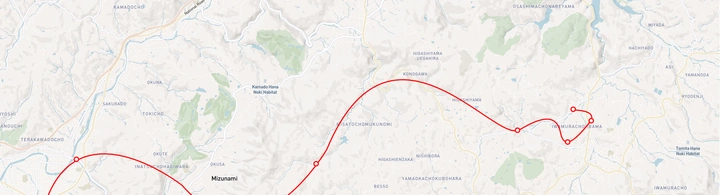
This was the final day with the car. With Nagoya only about two hours away, there was no need to rush. They spent the morning exploring the ruins of Iwamura Castle and wandering the quiet historic streets before beginning the drive back.
Once again they avoided the toll road, only about one hour more total driving, but they were in no hurry. This made it possible to pass through Seto and Toki, both well known towns for traditional Japanese ceramics. These aren't places that most travelers make a special effort to visit unless they already have a specific interest, but passing through with time to spare made it easy to stop and explore a few shops and learn something they hadn't expected.
When planning their trip, they had briefly considered returning the car earlier and continuing on to Tokyo that evening by train, or even to by early afternoon. In the end, they chose not to, following their idea that they should live in the moment, and not try to rush. They didn't want this entire day to simply be about transit and arriving late would not have meaningfully changed the following day, but it would have turned their last day with the car into basically just a chore to return it, rather than a day to enjoy. Keeping the car allowed the day to stand on its own.
In Nagoya, the family was dropped off at the front door of their downtown hotel while one person returned the car to the rental office. Public transport would have required a short taxi ride to get themselves and luggage from the station.
The one-way drop-off incurred a ¥35,000 fee for returning the car in a different prefecture. This felt significant, but it was still far more practical than backtracking all the way to Osaka, especially since the next stage of the trip would continue onward by shinkansen. The drop-off fee was a lot less than if they had done a round trip ending back in Osaka.
What having the car changed today
- The one-way drop-off avoided a full return loop to Osaka that would have added hours of driving, fuel, and tolls
- Ending the car in Nagoya aligned naturally with continuing onward to Tokyo by shinkansen
- The final day remained unhurried instead of becoming a pure transfer day
- Passing through Seto and Tajimi made it possible to explore lesser-seen parts of the Nagoya region
- Returning the car marked a clean transition point, where keeping it longer would have added little value
Day 9 Cost Comparison
Public transport - itemized costs
| Item | Cost | Time |
|---|---|---|
| Bus to Nagoya (total, 4 people) | ¥6,640 | ~2h 00m |
| Bus to Hida Folk Museum | ¥840 | - |
| Luggage delivery to Takayama | ¥20,000 | - |
| Public transport total | ¥27,480 | ~2h 00m |
Car - itemized costs
| Item | Cost | Time |
|---|---|---|
| Car rental (daily) | ¥18,000 | - |
| One-way drop-off fee (Nagoya) | ¥35,000 | - |
| Gas | ¥900 | ~2h 00m |
| Parking | ¥1,000 | - |
| Car total | ¥54,900 | ~2h 00m |
ⓘ Comparison Notes, Inclusions, & Exclusions
- Toll roads are excluded to keep the comparison conservative, even though expressways could have reduced driving time significantly.
- No parking costs are included for Nagoya, as the car was returned directly to the rental office.
- The public transport scenario assumes direct travel to Nagoya without intermediate stops.
- Detours through Seto or Tajimi are excluded from the public transport comparison, as they would require additional transfers and planning.
What is the Actual Cost of Renting a Car in Japan
This case study followed a real nine-day trip taken by a real family of four, comapring a car-based itinerary with one that could theoretically have been done entirely by public transport. The route spanned a variety of urban areas, regional towns, and genuinely rural locations.
For this trip, renting a car for nine days cost approximately ¥81,210 more than relying on public transport.
That comes out to ¥20,300 per person.
About ¥2,250 per person per day.
This comparison includes all direct transportation costs that change based on whether a car is used:
- rental fees
- fuel
- parking
- tolls where applicable
- a one-way drop-off fee
This is compared to realistic public-transport alternatives, but intentionally excludes harder-to-anticipate costs such as:
- situational taxi use
- repeated luggage forwarding
- guided tours booked primarily to simplify logistics
- itinerary changes made to avoid complex transfers
As a result, the comparison errs on the conservative side and naturally favors public transport on paper - even without including the intangible non-monetary costs/benefits of having a car at their constant disposal.
Where the difference actually accumulated
The first three days of the trip - largely centered on Kyoto - account for about ¥40,000 of the total ¥81,210 difference. Most of the remainder comes from the one-way drop-off fee at the end of the rental.
It's tempting to try to eliminate the drop-off fee by trying to make it a round trip rental, but often, as in this case, that would nullify many of the benefits of renting, so it's important to be ready to think of it not as an extra unwanted cost, but just as a part of the whole package.
In this case, dropping the car in Nagoya made the most sense given the onward travel to Tokyo. If they had tried to avoid that relativly small fee, it would have caused re-arranging the entire trip and backtracking or skipping some parts.
Outside the Kyoto portion, day-to-day costs were relatively close to break-even. Those were also the days where the car delivered the most flexibility, allowed for sights further apart, fewer transfers, and less predictable schedules.
Even in Kyoto, where public transport looks great on paper, the car still provided value in ways that are hard to price. Easier luggage handling, less walking for mobility-challenged travelers, and accommodation choices not constrained by proximity to major stations.
Any savings from staying outside the city center were not included, but the family did report that staying in a less central Air B&B saved them ¥30,000 - almost the entire difference in renting vs public transportation for those three days.
What ¥2,000 per person per day doesn't capture
Taken on its own, ¥2,000 per person per day might sound like just a loss, but keep in mind that it's paying for many small, everyday choices that only are become an option once a car is part of the trip.
- Meals happened when it felt right, not where train schedules made them convenient.
- Accommodation options multiplied when it didn't need to be within walking distance of major stations.
- Short detours stayed short instead of causing major changes in the day's itinerary.
- Fewer moments were shaped by questions like "is this worth the hassle?"
- Planning based on what to do with luggage
Individually, these differences are small - sometimes only a few hundred yen, sometimes enough to offset much of the daily difference on their own. Taken together, the cumulative total doesn't show up in expense tables, but it completely changes how the day turns out.
What the accounting can't fully express is how many small decisions simply stop needing to be made.
Other larger, situational costs that aren't guaranteed expenses, but are commonly associated with public-transport-based are also covered in that ¥2,000.
- Taxi rides that feel reasonable when tired
- luggage forwarding across multiple regions or reliance on coin lockers
- guided tours booked primarily to simplify logistics
Transportation stopped being something that required constant consideration. Instead of repeatedly weighing cost, timing, and connections, the focus shifted to simpler questions: how much energy was left, what looked interesting, and whether it felt worth staying a little longer.
Practical Tips for Planning with a Rental Car in Japan
Here are just some practical tips to help get the most out of renting a car in Japan.
- Local roads vs. toll roads
Decide what you're optimizing for that day: time, cost, or the experience of the drive.
Unless you are driving across the country, toll roads are often only 30-60 minutes faster and may cost ¥2,000 or so. Sometimes that hour matters - especially if what you care most about is at the end of the drive. Maybe you need to make it before something closes.
Other days, when the drive itself is part of the experience, local roads make more sense.
Google Maps estimated times are usually very close. The phone version give and idea of the toll fee. Navitime is better, but requires Japanese or using a translation app.
As a rough mental model:
- Toll roads = faster, predictable, more expensive
- Main roads = free, slightly slower, visually repetitive
- Side roads = slowest, free, often the most interesting - and part of the adventure
- Scan the map for small stops, not just destinations
Google Maps will automatically try to route you onto the fastest route. This means even for non-toll routes, it will stick to major non-toll highways. Even though they are free, these are usually lined with the same chain stores found everywhere in Japan. Many of the more interesting places sit just off those roads, but reaching them and navigation the turns and dead ends will add some time. Just be sure to plan in extra time if that is what you are looking for.
Looking at the map ahead of time helps you decide whether a detour is worth it before you're already tired or late. It's often better to plan those in the morning when still feeling fresh and adventurous.
- Take a deep breath and drive with less urgency
Missing a turn is rarely a problem. Let the navigation reroute you. Unless you're on the expressway, a mistake usually costs only a few minutes.
If you feel stressed, pull into a parking lot, take a breath, and reset. Driving calmly matters more than shaving off a minute or two and you will enjoy it a lot more.
In cities, think one or two blocks at a time. The rules don't change - driving two blocks in Kyoto is no different from driving two blocks in the busiest intersection of a smaller town.
- Put distances into perspective
An hour of driving can feel long - until you compare it to urban travel.
If you wouldn't think twice about spending 40-60 minutes crossing Tokyo by subway, it's worth asking why the same time feels unreasonable by car.
The same logic applies to accommodation. If you'd stay 40 minutes away by train, staying 40 minutes away by car - in another town or on the outskirts - can make just as much sense. Just keep morning traffic in mind when heading into cities.
- Look beyond city centers for accommodation
With a car, staying outside the center often means quieter surroundings, lower prices, and cheaper parking.
Compare the savings against parking costs and drive time. Unless you would spend every day in the same neighborhood as your hotel in the city, proximity matters less than it does with public transport.
- Think in terms of forward movement, not day trips
A car makes it easier to turn round-trip excursions into pass-through days, reducing backtracking extra ticket costs.
Even planned day trips can sometimes be repositioned. For example, a stop like Miyama Kayabuki-no-sato could function as a pass-through if the next destination lies in the same general direction.
Keep this in mind when you find that the only real reason you are making something into a day trip instead of overnight, or pass-through is because you don't want to mess with luggage. Keeping a hotel as a "base" for luggage is not needed when you have a car.
- Use the car selectively in major cities
Even in places like Kyoto, a car can help with luggage handling, mobility needs, or linking distant areas - but it doesn't need to be used for every short hop.
Parking location matters more than distance driven. A reasonably priced 24-hour spot can still be worthwhile even if the car stays parked most of the day, especially if moving it later resets the timer.
- Treat dispersed sites differently from single attractions
Many places are not highly rated simply because they are not easy to get around on public transport, so not many people go, and it does not get the publicity.
Places spread across a wide area - like the Sekigahara battlefield in this posts example, rural villages, plateau regions - are often technically reachable by public transport but function very differently without a car.
Train-based visits often cover only what's near the station. When researching, look not just at stations, but at what sits just beyond comfortable walking distance. Places closer to stations often have higher review counts, even when equally good options exist farther out.
- Don't underestimate luggage logistics
Forwarding services help, but they introduce timing constraints. Keeping bags in the car allows days to connect naturally without planning around lockers, cutoff times, or station access.
A lot of places that would be highly rated as worth seeing do not get the attention because even though the attraction is great, on the same level or better than other places it's perceived as not worth the luggage hassle.
- Let time, not distance, be flexible
With a car, days can stretch or compress naturally. If something is more interesting than expected, you can stay. If energy runs low, you can move on without reorganizing everything that comes next.
- Be intentional about where the car adds value
The biggest cost differences tend to appear in dense urban days. The biggest benefits usually emerge once travel becomes regional or multi-stop.
You don't need the car everywhere for it to be worthwhile, and every single day does not have to have overall savings. Make a plan and spread it out. Decide if it is worth it overall.
- Don't spend too much time trying to scrimp on parking
People have the idea that parking is super expensive. It can be, but you will find that places even a few blocks from the station are more affordable, or have max limits. Once you find something in your range, don't spend twenty minutes driving in circles to find something 200 yen cheaper.